Why Are We So Curious About What Our Crush Chooses?: Reading Between the Lines of Their Decisions
Choices reveal more than words ever could—discover how to decode someone's true personality through the questions you ask.

What Do Their Choices Really Tell Us?
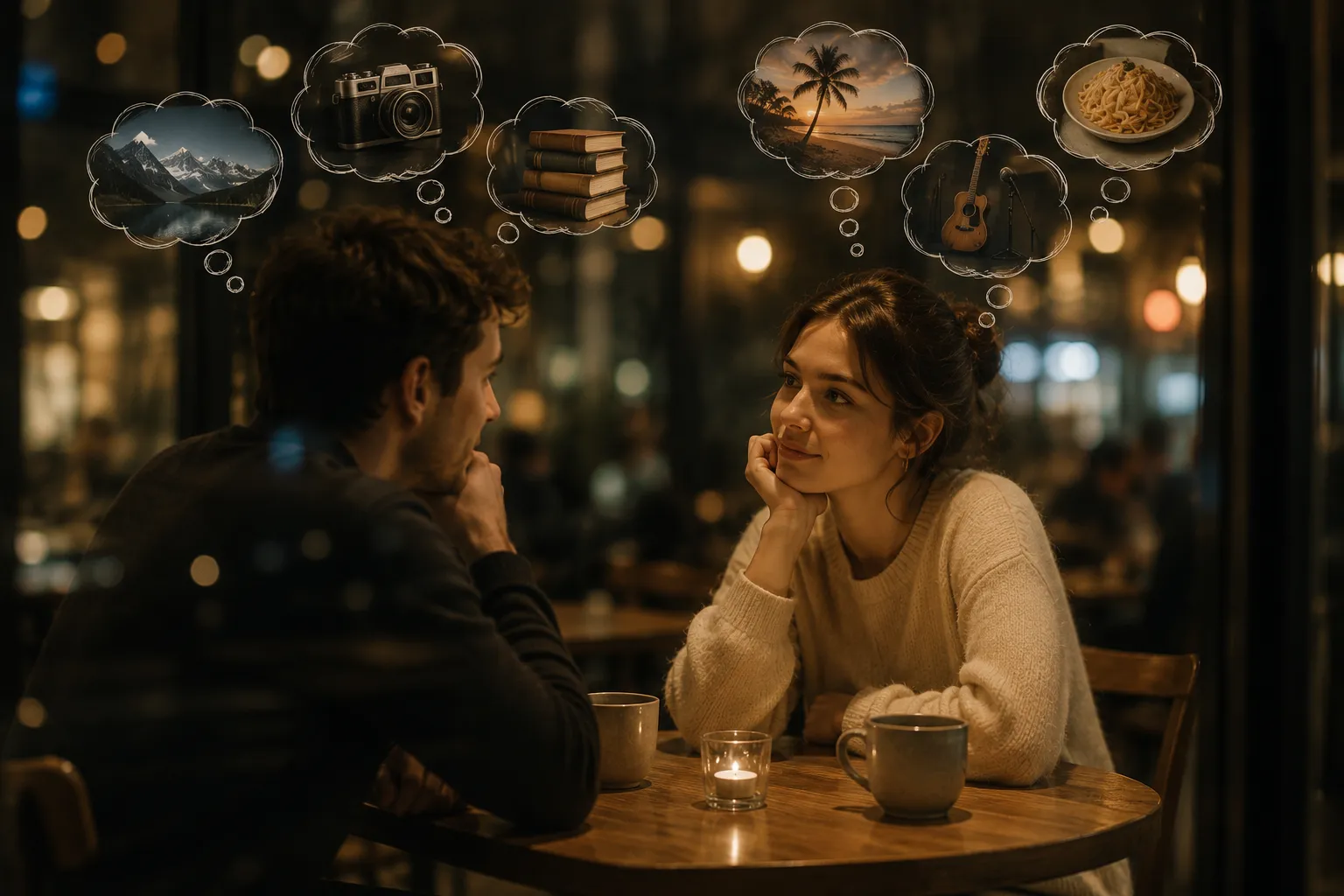
Have you ever found yourself in a café, watching someone you like deliberate over the menu? You stare intently, oddly invested in what they'll order. "Oh, they picked the same thing as me!" or "Interesting choice..." — and suddenly you're reading meaning into a simple coffee order. Whether it's deciding what to eat, making weekend plans, or even shopping for clothes, their choices ping on your radar. Why do we care so much about the small decisions made by people we're attracted to? Perhaps it's only natural to want glimpses into what's really going on in their mind.
Psychologists connect this tendency to concepts like projection and identification. Projection refers to attributing our own thoughts or feelings to someone else. For instance, when we feel anxious in a situation, we might assume the other person feels the same way. Conversely, when watching someone we like make a choice, we might think, "That's exactly what I would have done!" or feel delighted discovering shared preferences — essentially seeing ourselves in them.
But at a deeper level, we're trying to decode their values, tastes, and priorities through their choices. What someone orders reveals their adventurousness with food — or lack thereof. Their weekend plans tell you whether they value rest or activity, solitude or socializing. We're collecting puzzle pieces, assembling a picture of who this person really is.
In a way, we're peering through the small window of their choices to glimpse the bigger picture of who they are. And sometimes, simply knowing what they like becomes meaningful all on its own.
| Their Choice | What We're Trying to Learn |
|---|---|
| Menu selection | Tastes, preferences, openness to trying new things |
| Movie/book recommendations | Interests, emotional depth, core values |
| Weekend plans | Lifestyle, rest vs. activity preference, energy levels |
Does any of this feel familiar? Have you caught yourself doing exactly this?
Sources:
Based on the psychological concepts of projection and identification, drawing from general theories about how we explore and understand romantic partners.
What choices does someone you like make that you find yourself most curious about?
VibePick: What Your Choices Say About You
We make dozens, even hundreds, of choices every day. What to wear when we wake up, what to have for lunch, which route to take home, what to watch in the evening. Each seemingly trivial decision actually contains traces of our personality, preferences, and values — much like how we try to understand others through their choices.
Our everyday choices act as small windows into who we are. Some people thrive on novelty, always picking the most unusual item on the menu. This choice says: "I don't like being predictable. I crave fresh experiences." Others gravitate toward the familiar and proven. Their choice communicates: "I value comfort and stability. I'd rather stick with what I know."
Our hobbies reveal us too. Someone who loves high-energy sports likely has a bold, challenge-seeking personality. Someone who prefers reading quietly or painting may be more introspective, drawn to depth and reflection. Psychologists suggest these choices connect to our inner needs and core values. Those who frequently choose social gatherings may prioritize belonging and connection. Those who regularly choose solitary time may value independence and self-reflection.
We often examine our own choices to better understand ourselves. "Why did I pick this?" "What does this say about me?" Discovering your own "VibePick" is like uncovering your unique personal signature.
Everyday VibePick Personality Types
| Situation | Sticks to "My Vibe" | Explores New Vibes |
|---|---|---|
| Choosing lunch | Same favorite spot, same usual order | New restaurant, most intriguing item on the menu |
| Weekend planning | Relaxing at home, familiar neighborhood walk | New exhibition, unexplored day trip |
| Hobbies | Consistently practiced sport or instrument | Online course in an entirely new field |
| Clothes shopping | Reliable style, wardrobe staples | Trend-forward, bold new looks |
Sources:
Based on psychological research exploring the relationship between personality types, personal values, and choice behavior — examining how everyday decisions reflect individual tendencies.
Does anything in this table make you think, "That's so me"? What's your VibePick style?
The Psychology Behind Our Choices: What's Happening in Our Brains?
When we make a choice, it's tempting to think, "I just liked it better." But behind every decision lies a fascinating web of psychological and neurological processes. Why does one person reach for red while another chooses blue? Is it simply personal taste, or does it signal something deeper about who we are?
Psychologists refer to human decision-making as a "cognitive process" — and it's anything but simple arithmetic. Our choices are shaped by past experiences, current emotional states, and even unconscious biases. A joyful childhood memory involving a red toy might make you gravitate toward red decades later without realizing why. This is how memory and experience quietly guide our decisions.
Neuroscience research shows that multiple brain regions activate when we choose. The brain's reward centers play a particularly important role, predicting how much satisfaction — or regret — a choice might bring. This explains why we sometimes opt for immediate pleasure over logical outcomes. It's similar to how we might act differently around someone we like, driven by the thrill of their presence rather than rational calculation.
Cognitive psychology also introduces the concept of "heuristics" — mental shortcuts we use to make quick decisions. Thinking "It's a famous brand, so it must be good" is a heuristic at work. These shortcuts enable efficient decision-making but can sometimes lead us astray.
Every choice contains information we're not consciously aware of. Just as we search someone's casual remarks for hidden meaning, we often discover unexpected aspects of ourselves through our own decisions — latent tendencies, buried desires.
The Inner Psychology Influencing Our Choices
| Choice Scenario | Underlying Tendency | Neuroscience Perspective |
|---|---|---|
| Trying new food | Adventurousness, curiosity, novelty-seeking | Reward system activation, anticipation of the unknown |
| Sticking with the familiar | Stability-seeking, risk aversion, comfort preference | Using established neural pathways, reducing uncertainty |
| Choices driven by social connection | Belonging needs, desire for approval, valuing relationships | Social reward anticipation, positive feedback expectation |
| Choices aligned with personal beliefs | Consistency maintenance, identity reinforcement, moral reasoning | Reducing cognitive dissonance, strengthening belief systems |
Sources:
Based on decision-making theories from behavioral economics and cognitive psychology, as well as neuroscience research on the brain's reward systems, explaining psychological factors that influence personal choices.
Looking at the psychology embedded in each choice, have you gained any new insight into your own behavior? What influenced your choices today?
Discovering Your Relationship Style Through Your Choices
What we choose can offer hints about our deepest views on love and how we connect with others. Like following a treasure map, tracing our choices leads us to our romantic DNA. Here's a fun checklist to help uncover your hidden relationship tendencies. You might discover something new about yourself — and gain deeper insight into your connections.
Through honest answers to simple questions, let's explore what direction your love life might take and what role you tend to play in relationships. Think of this not as a clinical assessment, but as an enjoyable way to know yourself better.
Relationship Style Self-Check
Read each question and choose the answer that comes to mind first.
| Question | A. First Instinct | B. After Some Thought | C. What Appeals Most |
|---|---|---|---|
| 1. What do you want to do on a weekend evening? | Stay home comfortably with a favorite movie or book. | Enjoy dinner or a casual gathering with friends or a partner. | Explore somewhere new or dive deep into a hobby. |
| 2. What matters most in a romantic relationship? | Providing mutual security and forming deep bonds. | Spending enjoyable time together and creating memories. | Supporting each other's growth and evolving together. |
| 3. How do you typically respond to conflict? | Consider their feelings first and try gentle dialogue. | Explain logically and seek common ground. | Take space to process emotions, then revisit the conversation. |
| 4. As a relationship develops, what do you hope for? | Building deep, intimate connection between just the two of you. | Sharing diverse experiences and expanding your world together. | Positively influencing each other while growing together. |
This checklist draws from attachment theory — a psychological framework suggesting that early relationships with caregivers shape how we connect with others as adults. Someone who received stable love in childhood tends to feel secure and build trust easily in adult relationships. Those with less stable early experiences might feel anxious in relationships or tend to avoid deep connection.
Of course, no single checklist captures everything. But it can offer a starting point for understanding your patterns in love and relationships.
Which answers appeared most often for you? How closely does this reflect how you actually approach relationships?
Sources:
Based on attachment theory from psychology, which suggests that relationship formation patterns can be glimpsed through individual choice tendencies.
Understanding Their Choices Deepens Your Connection
Why are we so curious about the choices of people we're attracted to? It's more than idle curiosity. Their decisions offer valuable clues about their values, priorities, and how they view the relationship. Understanding what their "choice moments" reveal can help you know them on a much deeper level.
Examining someone's choices is like reading a map of their inner world. By observing and trying to understand what they prioritize in different moments, we draw closer to each other. This isn't about simply accommodating them — it's about building a mature relationship grounded in genuine understanding.
| What Understanding Their Choices Reveals | Positive Impact on the Relationship |
|---|---|
| Their values and priorities | Foundation for respecting and accepting differences |
| Potential sources of conflict | Reducing misunderstandings through constructive dialogue |
| Strengthened trust and connection | Deeper, more stable relationship |
| Mutual growth and relationship development | Building a healthy partnership that evolves together |
The same applies to your own choices. Your decisions are a way of honestly revealing yourself. By showing how you choose in various situations, you give others the opportunity to truly understand you. Take what we've explored today and listen closely to your partner's choices — while letting your own choices speak your truth.
Sources:
Based on the general psychological perspective that choice behavior reflects personal values and beliefs, and that such understanding positively influences relationship satisfaction.
Starting today, when your partner or someone you're interested in makes a choice, why not imagine what feelings might lie beneath it? And let your own choices reveal who you genuinely are.
* I'd love to share more reflections on building healthier, warmer relationships.
* Your thoughts and feedback are a tremendous source of encouragement for creating more honest, meaningful content.