Can Opposites Really Last?: Why Some Couples Stay Together Despite Being So Different
They keep choosing opposite answers in 'This or That' games, so why do some relationships still feel surprisingly stable?

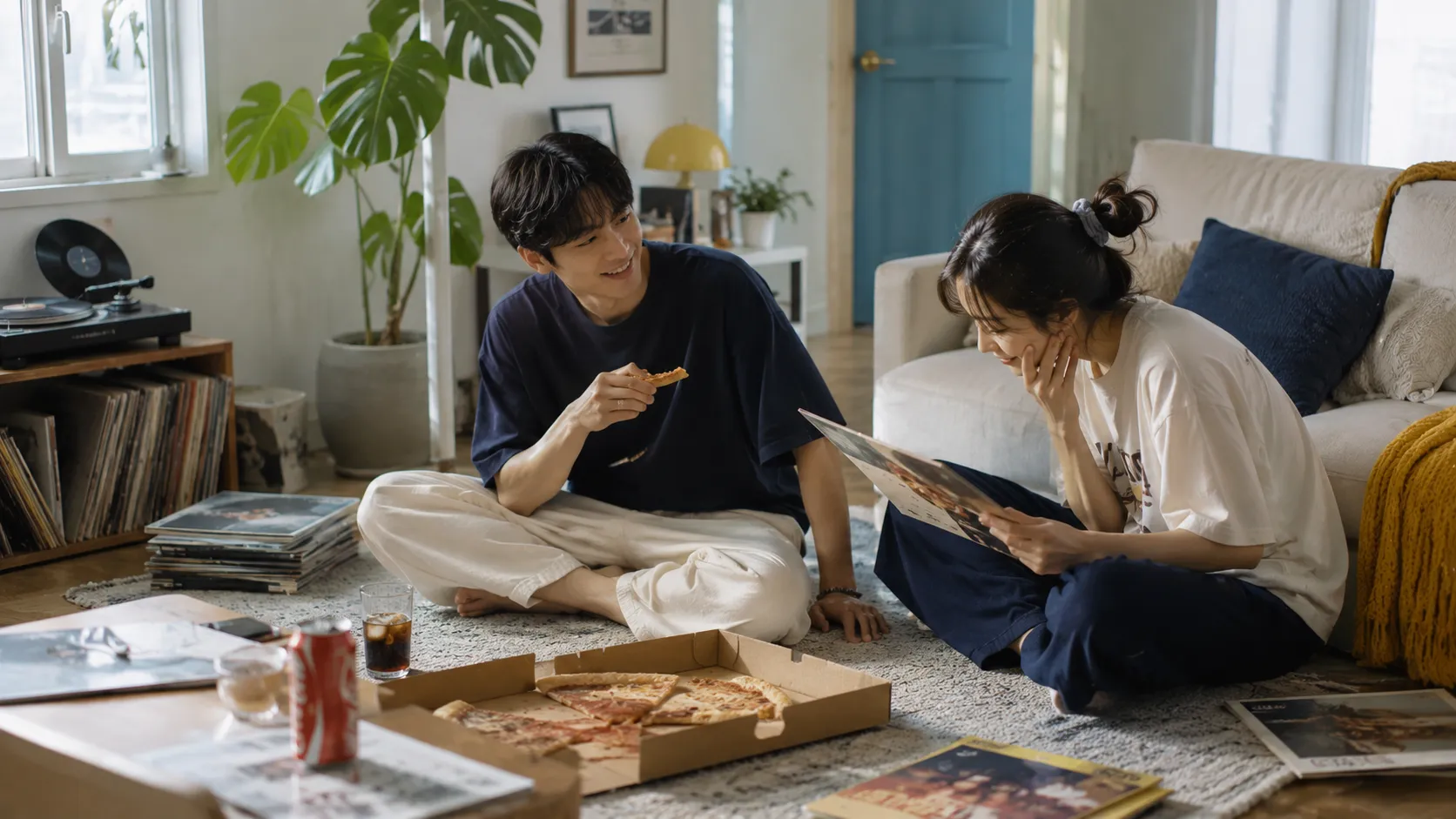
Does having similar tastes really lead to a longer relationship?
Before starting a relationship, we often imagine being with someone who simply clicks with us. Someone who likes the same food, spends weekends in similar ways, laughs at the same scenes in a movie, or naturally agrees with the little choices we make throughout the day. As we grow closer to someone, we quietly begin checking for these similarities, and before we realize it, that feeling of “we’re so alike” starts to feel almost synonymous with stability.
In the early stages of dating, those similarities can feel exciting. Listening to the same music, reacting to the same jokes, instinctively choosing the same things — it creates a comforting sense that the other person somehow understands your world without needing too much explanation. And because of that, many of us naturally begin to believe that relationships are more likely to last when two people have similar tastes and personalities.
But strangely enough, reality does not always work that way.
Some couples who seem perfectly compatible end up exhausting each other surprisingly quickly, while others who disagree on almost everything somehow stay together for years. One person may love staying home while the other constantly wants to go out and explore, yet the relationship itself still feels oddly stable and easy.
At some point, that contradiction starts to feel confusing.
Is a lasting relationship really about how similar two people are? Or have we been mistaking compatibility for something much simpler than it actually is?
What’s interesting is that we often explain far too much of our relationships through the language of “taste.” Not just food or movies, but texting habits, spending styles, ways of expressing affection, even emotional rhythms. We tend to label people as either “compatible” or “incompatible” based on these surface-level patterns.
And yet, people who have been in long-term relationships often arrive at a very different conclusion. Over time, they realize that what truly strains a relationship is not necessarily the differences themselves, but the emotions that emerge when those differences begin to collide.
And perhaps that is exactly where relationships start becoming far more complicated than we first imagined.
We keep clashing in "This or That" games. Should we be worried?
It happens more often than we’d like to admit. One person loves mint chocolate, while the other can’t stand it. One person plans every detail of a trip, while the other would rather wander around without a schedule. Sometimes even choosing where to eat turns into an oddly exhausting back-and-forth.
And somewhere along the way, a quiet sense of uneasiness begins to creep in.
"Are we just too different?"
"Does this mean we’ll eventually grow apart?"
These days, with endless personality tests and “This or That” games online, it has become surprisingly easy to measure relationships through compatibility. When two people choose the same answers, it feels reassuring. When they don’t, the relationship itself can start to feel unstable for no clear reason.
But interestingly enough, many long-term couples are not nearly as similar as we imagine them to be.
Some couples disagree on almost everything — how to spend weekends, how often to text, how to recharge after a stressful day — and yet the relationship itself still feels steady. Meanwhile, other couples seem perfectly aligned on paper, only to grow emotionally exhausted over time.
Are you curious about whether your differences are just personality quirks or a sign of deeper misalignment? If so, why not try a real-time "This or That" game to see how your perspectives actually compare?
The longer people stay in relationships, the more they begin to realize something important: what strains a relationship is often not the differences themselves, but the emotions created around those differences.
For example, one person may need solitude to recover emotionally, while the other interprets that distance as rejection. One person may express affection constantly, while the other feels overwhelmed by too much emotional reassurance.
The issue is rarely the difference alone. More often, it’s the meaning we attach to it.
And perhaps that’s why long-lasting couples are not necessarily the ones who agree on everything, but the ones who resist turning every difference into proof that something is wrong.
We're mostly compatible, so why does one small difference suddenly feel so overwhelming?
Strangely enough, the more stable a relationship becomes, the more sensitive we sometimes grow to the smallest differences. Things that once felt harmless — or even quietly charming — can begin to feel unexpectedly heavy over time.
This happens especially often in relationships where almost everything else seems to fit naturally. Maybe you enjoy the same routines, laugh at the same jokes, and rarely disagree about anything important. And yet somehow, a small difference in texting habits or personal space slowly turns into recurring tension.
One person may need quiet time to recharge, while the other quietly interprets that distance as emotional withdrawal. One person may express affection naturally and often, while the other feels pressured by constant reassurance. Little by little, misunderstandings that once felt insignificant begin carrying far more weight than they probably should.
Many people assume relationships fall apart because two people are fundamentally incompatible. But in reality, relationships often grow heavier when small differences start feeling personal.
A delayed reply no longer feels accidental. A tired tone suddenly sounds cold. What once felt neutral slowly begins to feel loaded with meaning.
People who have spent years observing long-term relationships often point to a similar pattern: couples do not struggle simply because they are different. They struggle when they stop interpreting each other with generosity.
And once that happens, even very ordinary moments can start to feel draining.
Perhaps that’s why couples who last tend to approach conflict a little differently. Instead of rushing to decide who is right or wrong, they stay curious a little longer. They try to understand what the other person might be feeling before reacting only to the surface of the situation.
In the end, compatibility may not come from agreeing on everything. It may come from continuing to make room for each other, even when those differences become inconvenient.
The couples who last are not always the ones who are most alike
Interestingly, decades of relationship research have continued to point toward a surprisingly consistent idea: long-term relationships are shaped less by perfect compatibility and more by how two people treat each other during moments of tension.
Relationship researcher Dr. John Gottman has often noted that lasting couples are not necessarily the ones who agree on everything, but the ones who maintain respect even when they disagree. And the more researchers observed long-term couples over time, the more they noticed that relationship satisfaction had surprisingly little to do with sharing identical tastes.
| Key Factor | Impact on Relationship |
|---|---|
| Shared Tastes | Less influential over time |
| Respect during Conflict | Strong positive impact |
| Emotional Safety | Increases long-term stability |
| Curiosity toward Differences | Builds deeper trust |
| Psychological Ease | Closely linked to relationship longevity |
What people tend to remember most in relationships is rarely how similar they were. More often, they remember how they felt during emotionally difficult moments.
Did they feel understood when they were vulnerable? Did disagreements feel emotionally safe, or emotionally exhausting? Did the relationship feel like a space where they constantly had to defend themselves, or somewhere they could slowly relax and be fully themselves?
That may explain why some couples who seem completely opposite on paper still manage to create calm, stable relationships over many years. At the same time, some couples who appear almost perfectly compatible gradually lose their emotional connection because the relationship no longer feels emotionally safe.
Perhaps lasting relationships are not built by finding someone who mirrors you perfectly, but by creating a space where two different people can continue feeling accepted despite those differences.
Why do we stay with people who are so different from us?
Looking back, the relationships that stay with us the longest are not always the ones where everything matched perfectly. Sometimes, the people who leave the deepest emotional imprint on us are the ones who lived completely differently — different habits, different ways of resting, different emotional rhythms — and yet, being around them somehow felt unexpectedly natural.
At the same time, many of us have experienced the opposite. Relationships that looked perfect on paper, where almost every preference aligned, but where we still found ourselves becoming strangely exhausted over time. As if maintaining harmony required constantly monitoring our words, reactions, and emotions.
And perhaps that experience slowly teaches us something.
Long-lasting relationships may not be built on perfect similarity after all. They may depend far more on whether two people can continue making space for each other’s differences without immediately treating those differences as flaws that need to be corrected.
Maybe that’s why some couples continue choosing opposite answers in every “This or That” game and still remain deeply connected years later. Their relationship survives not because they see the world in exactly the same way, but because they stop expecting sameness to be the only proof of compatibility.
Over time, they learn how to stay curious instead of defensive. They learn how to ask questions instead of making assumptions. And little by little, the relationship becomes less about “finding someone identical to me” and more about building a space where two different people can still feel emotionally safe together.
Related reading:
Sometimes, repeated misunderstandings are not signs of incompatibility, but signs that two people simply experience connection differently.
This guide explores how different emotional and communication styles quietly shape modern relationships.
https://vibe-pick.com/en/explore/quiz/ideal-type/love-type-guide/
In the end, we often stay longest not with the people who mirror us perfectly, but with the people who make us feel comfortable enough to slowly become more ourselves.
* You can support our work through the Ko-fi link in the menu or at the bottom of this page.
* Every bit of support helps us continue creating thoughtful, human-centered stories and experiences.