TOP 5 Moments That Kill the Spark Early On: When Excitement Turns to Disappointment
That burning feeling can cool down faster than you'd expect — here's what's really happening when it does.

Why the Spark Fades Faster Than You Expected
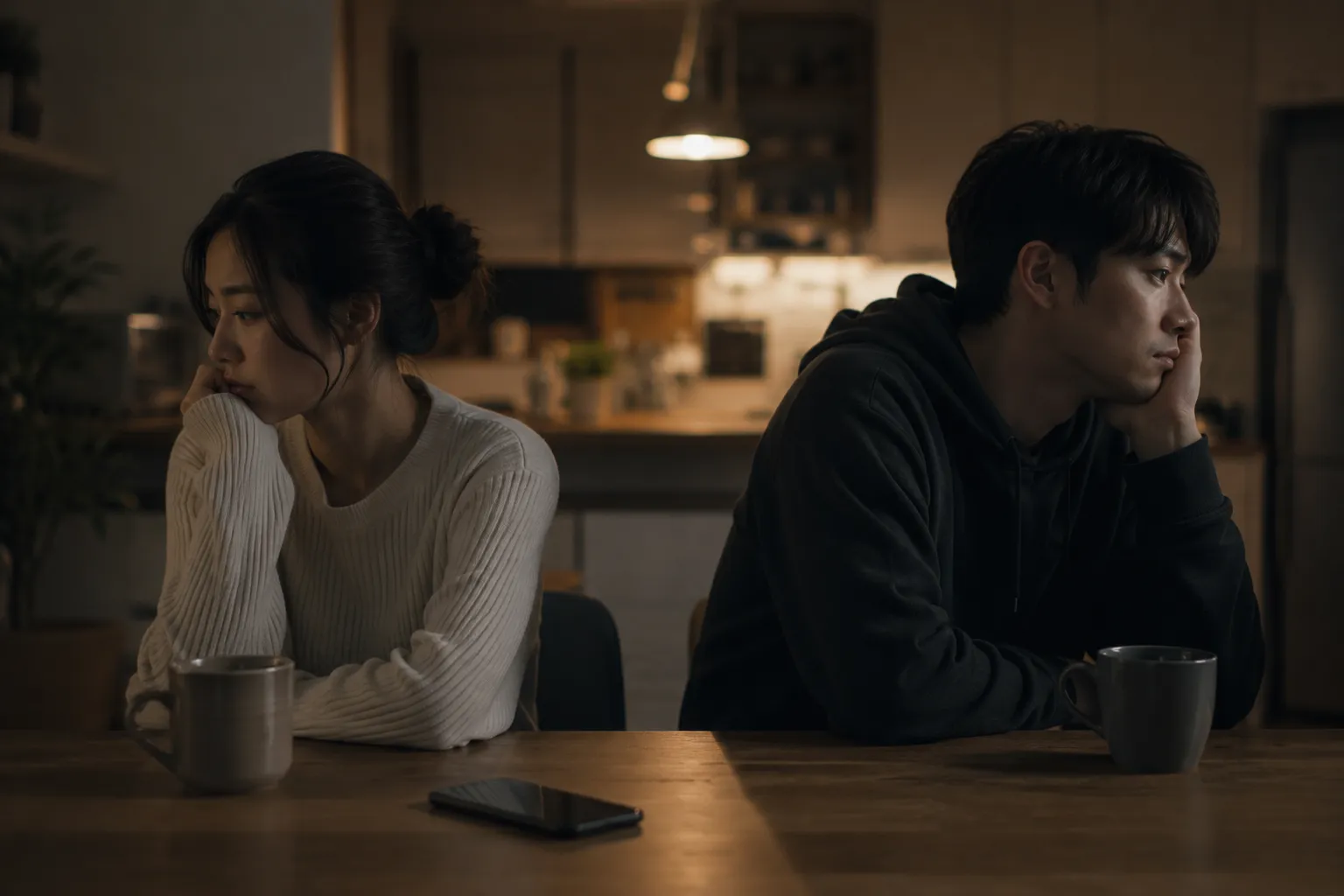
"Yesterday I felt like I had the whole world — so why does the sound of their breathing annoy me today?"
If you've ever felt that, you're not alone. Not even close. There's something almost universal about that whiplash: one week you're absolutely certain this person is different, special, maybe even the one — and then almost without warning, something small shifts and the warmth starts to drain away.
Psychology has a name for what's happening in those early weeks of romance. It describes the initial stage as a kind of selective perception — where your brain, flooded with dopamine and optimism, essentially edits out the parts of a person that don't fit the story you want to believe. You're not lying to yourself, exactly. You're just seeing them through a very flattering filter.
But here's the thing: according to researchers, that filter doesn't last. As the initial chemical rush begins to settle, the brain gradually restores its more balanced, realistic judgment. And that's when you start noticing things you didn't see before.
The important thing to remember? The cooling isn't your fault. The person didn't suddenly become worse. You just stopped seeing the highlight reel and started seeing the full picture.
So what do you do with that? Is it a sign to walk away, or just a normal step toward something more real? Let's look at the five most common moments that cause that early spark to fade — and what they're actually telling you.
(Of course, I'm not a psychologist — this is meant as a thoughtful exploration of ideas from relationship research, not a substitute for professional advice.)
The 5 Moments That Cool Things Down Fast
Researchers describe a phenomenon where a single small observation can crack the entire image you've built of someone. These cracks aren't always dealbreakers — but in the heightened state of early attraction, they hit differently.
Here are the five most common spark-killers people report in early relationships.
[5 Moments That Fade the Spark Early On]
| Rank | Situation | Why It Hits So Hard |
|---|---|---|
| 1 | How they treat strangers or service workers | Reveals true character and empathy beneath the charm |
| 2 | Words that don't match actions | Fundamentally undermines trust before it's even built |
| 3 | Dismissing or minimizing your feelings | Creates a deep sense of not being valued or seen |
| 4 | Small, repeated broken promises | Signals that you're not actually a priority to them |
| 5 | Extreme emotional swings or dependency | Drains your energy in unpredictable ways |
Reference: This table is adapted from research on early maladaptive relationship patterns in counseling psychology and John Gottman's work on relationship stability indicators.
Why Do These Moments Cut So Deep?
Psychologists call this "discovering character contradictions." In the early stages of dating, we fall for the image of someone. The moment we witness something that clashes with that image, the brain flags it immediately — almost like a mismatch alert.
Take number one — how they treat other people. It matters so much because the way someone behaves toward a waiter, a cashier, or a stranger on the street isn't curated for you. It's just them. And our brains recognize that instinctively. When we see something unkind there, something quietly registers: this might not be the person I thought they were.
Number four — small broken promises — might seem minor, but research in relationship psychology refers to this as an "availability" problem. Early dating is supposed to be when two people invest the most energy in each other. Even small moments of carelessness in this window get read as: I'm not really a priority here.
None of this necessarily means the relationship is over. But those cooling feelings? They're your brain being honest with you. You're no longer seeing the image — you're starting to see the actual person.
How do you usually respond when this happens? Do you pull away, or do you talk about it?
Were You in Love With Them — or With Your Idea of Them?
Here's a question that might sting a little: what if the person you fell for was partly a construction of your own hopes?
Psychology has a concept for this called projection — the process of layering your own ideals, desires, and unmet needs onto another person before you really know them. It doesn't make you foolish. It makes you human. But it does explain why the early rush of romance can feel so intense, and why reality can feel like such a letdown.
When someone acts exactly how you hoped they would, you think: this is fate. When they don't, you think: wait, who is this?
[What You Wanted to See vs. What's Actually There]
| Area | The "Fantasy" You Were Hoping For | The Reality You're Meeting |
|---|---|---|
| Attention | Will always put your feelings first | Sometimes their own needs come first too |
| Communication | Will just know when something's wrong | Needs to actually be told when you're hurt |
| Presence | Will always be warm, perfect, "on" | Gets tired, irritable — because they're human |
| The Relationship | Will feel effortless and conflict-free | Involves friction, compromise, and real effort |
Reference: Adapted from projective identification theory in counseling psychology and self-projection research in interpersonal psychology.
Why Do We Fall Into This So Easily?
Researchers suggest it comes down to unmet needs. The lonelier we feel, or the more intensely we want to be loved, the more powerfully we idealize whoever seems to offer that. If they're perfect, the thinking goes, then maybe the ache inside me will finally stop.
But here's what's actually happening: the other person hasn't changed. Your projection just broke, and now you're seeing them for real. That's not a failure. That's actually progress.
The real question worth sitting with isn't "did I misjudge them?" It's: "Was I in love with who they actually are — or with the idea of being finally, perfectly loved?"
The disappointment you're feeling might not be the end of something. It might be the beginning of something more honest.
Can You Rekindle It — or Is It Time to Let Go?
When the warmth fades, the first fear is usually: is this over? But psychologists tend to say something that's worth holding onto: where excitement fades, trust needs to grow. The end of the honeymoon phase isn't a verdict — it's a transition.
The real question is whether the cooling is just a natural adjustment, or a signal that something more fundamental is off. Here's a checklist to help you figure that out.
[10-Question Relationship Check: Is This Worth Saving?]
Check the ones that feel true for your situation right now.
| # | Check-In Question | Yes |
|---|---|---|
| 1 | When I notice their flaws, I feel mild disappointment — not contempt | □ |
| 2 | When I share something that bothered me, they actually listen | □ |
| 3 | After a fight, we tend to recover faster than we used to | □ |
| 4 | Aside from specific behaviors, I still genuinely like them as a person | □ |
| 5 | Our core values and general direction in life feel compatible | □ |
| 6 | When I point out something hurtful, they show a real desire to change | □ |
| 7 | There are moments when being with them feels more comfortable than exciting | □ |
| 8 | We're both willing to put in effort and have real conversations | □ |
| 9 | When I'm struggling, they show up emotionally for me | □ |
| 10 | I can name at least three genuine reasons I want to be with this person | □ |
What Your Score Suggests
- 7 or more — Yes:
This sounds like a natural shift from infatuation into something more grounded. The fantasy is fading to make room for real trust. Try having an honest conversation about where you both are — you might be more aligned than you think. - 4 to 6 — Yes:
You're at a crossroads. There are real things to work through here. Before deciding anything, ask yourself: are the biggest tensions between you actually solvable with effort and communication? - 3 or fewer — Yes:
The foundation may be more fragile than it appears. Repeated disrespect and values that fundamentally clash don't tend to improve on their own — and trying to force it will cost you more than the relationship is worth. This might be a moment for some honest reflection about what you actually need.
Reference: Adapted from the Relationship Assessment Scale in counseling psychology and John Gottman's research on relationship repair and recovery.
Facing a cooled-down heart isn't the scary part. The scary part is pretending it's not happening. But once you can see things clearly, you can actually choose — to build something deeper, or to protect yourself by stepping back.
What Lasts When the Spark Is Gone
So what's supposed to replace the spark? Many people treat the fading of early excitement as a kind of expiration date on a relationship. But researchers tend to disagree. They often describe it this way: real love doesn't begin until the infatuation wears off.
Once the dopamine rush settles, something shifts. You stop needing the other person to be perfect, and you start actually seeing them — flaws, contradictions, humanity and all. That's when the real work of love begins: learning to hold space for someone who is fundamentally different from you, and choosing them anyway.
Couples who stay together long-term aren't the ones who never lost the spark. They're the ones who kept replacing it with something sturdier — respect, patience, the willingness to stay curious about each other.
[Three Questions to Ask Before You Decide]
When you're unsure whether to stay or go, try sitting with these:
- Even knowing who they really are now — do you like who you are when you're with them?
- Do you approach your differences as problems to fight about, or as things to understand together?
- If you could go back to the beginning — knowing everything you know now — would you still choose them?
If you can answer those with a quiet yes, you're not running out of love. You're growing into it.
I hope this gave you something useful to think about — and maybe a little permission to be honest with yourself about where you are. The spark is brief. Respect, when you find it, lasts much longer.
* I'd love to keep exploring the messy, meaningful parts of love and connection with you.
* Your support helps me keep writing honestly about the things that matter most.