What Does Your Face Similarity Score Actually Mean?
AI compared two faces and gave you a percentage — but what does that number actually tell you? Here's how to read face sync rate scores properly.

"Is 74% High or Low?"
This is the first question after getting a face sync result. Is 74% similar a lot? A little? To understand the number, you need to know what AI is actually measuring.
What the Score Measures
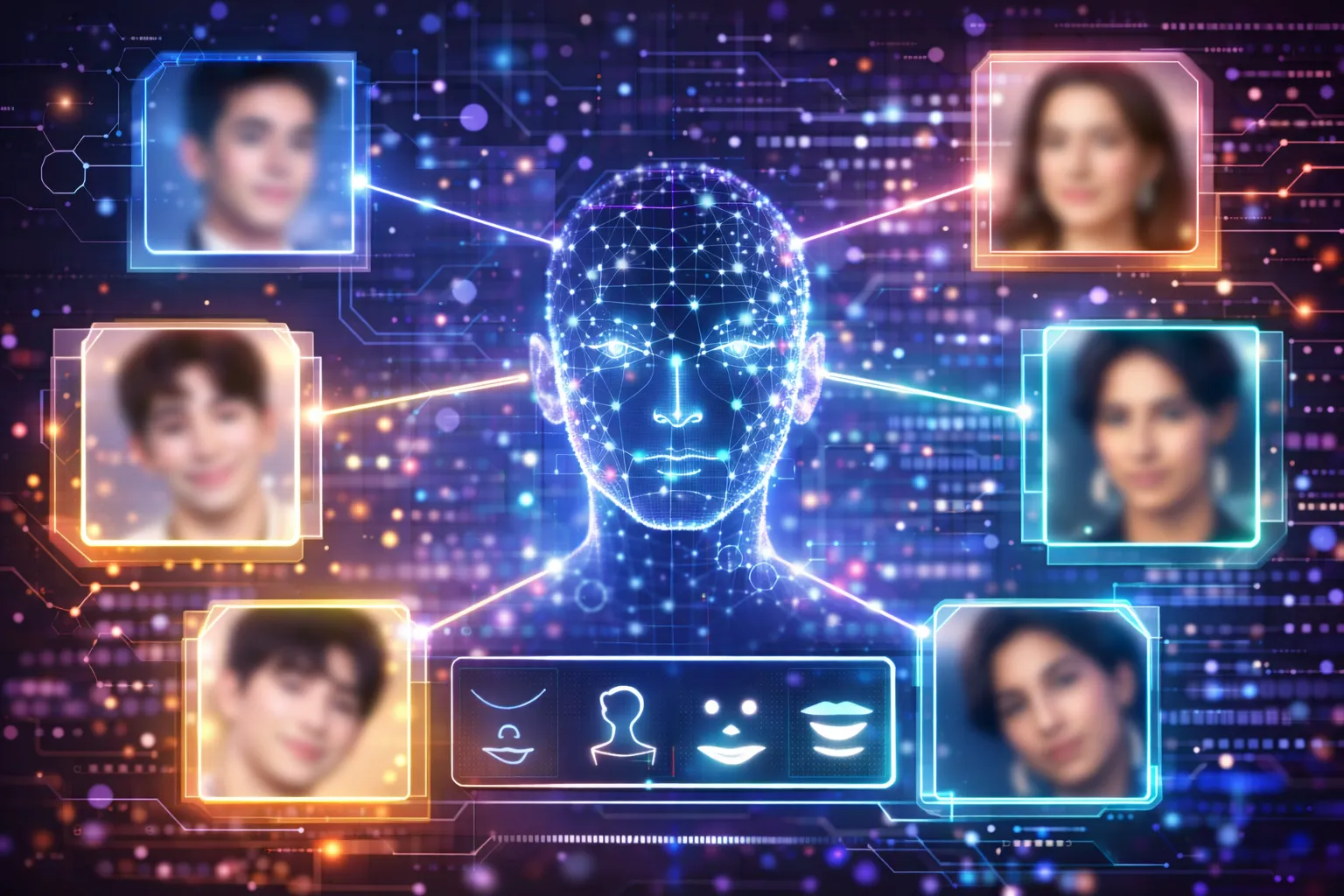
AI converts each face into a vector of hundreds of numbers, then measures the mathematical distance between the two vectors. That distance becomes your similarity percentage.
Importantly, this is not measuring "how similar they look to a human eye" — it's measuring how close the facial structures are mathematically. The two don't always agree.
What Each Range Means
| Sync Rate | What It Suggests |
|---|---|
| 90%+ | Very high — same person in different photos, or identical twins |
| 75–89% | High — clearly similar; common between close family members |
| 60–74% | Moderate — some features match, but overall different |
| 45–59% | Low — typical similarity between two random people |
| Below 45% | Very low — significantly different facial structure |
Why Doesn't the Same Person Score 100%?
Upload two photos of the same person and you'll often get 95–98%, not 100%. This happens because even minor differences in lighting, expression, or angle change the feature vector the AI extracts.
Even identical twins typically score 88–96%. Genetically identical at birth, but years of different expressions, sun exposure, and life experiences subtly reshape their faces.
What's "Similar" for Two Random People?
Two randomly selected strangers average around 45–55% similarity. Human faces share more structural commonality than you'd expect.
Using that as a baseline:
- 60%+ → noticeably similar
- 70%+ → the kind of similarity others would comment on
- 80%+ → "are you related?" territory
Variables That Affect the Score
The same two people can score differently depending on:
Photo conditions:
- Lighting direction and intensity
- Camera angle (front vs. side)
- Expression (neutral vs. smiling)
- Photo resolution
Appearance factors:
- Hairstyle (bangs, length)
- Glasses or sunglasses
- Makeup intensity
Fun Ways to Use Face Sync
- You vs. parents: Who do you actually take after?
- You vs. siblings: Which family member do you resemble most?
- You vs. a celebrity: Upload your photo alongside a celebrity's official photo
- Young you vs. now: Compare a childhood photo to a current one
Focus less on the exact number and more on exploring different combinations — the discoveries along the way are the real fun.