Biological Age vs. Apparent Age: Why Some People Look Younger Than Their Years
Same age, yet one person looks a decade younger — here's the science behind what actually determines how old your face looks.

Two Different Kinds of Age
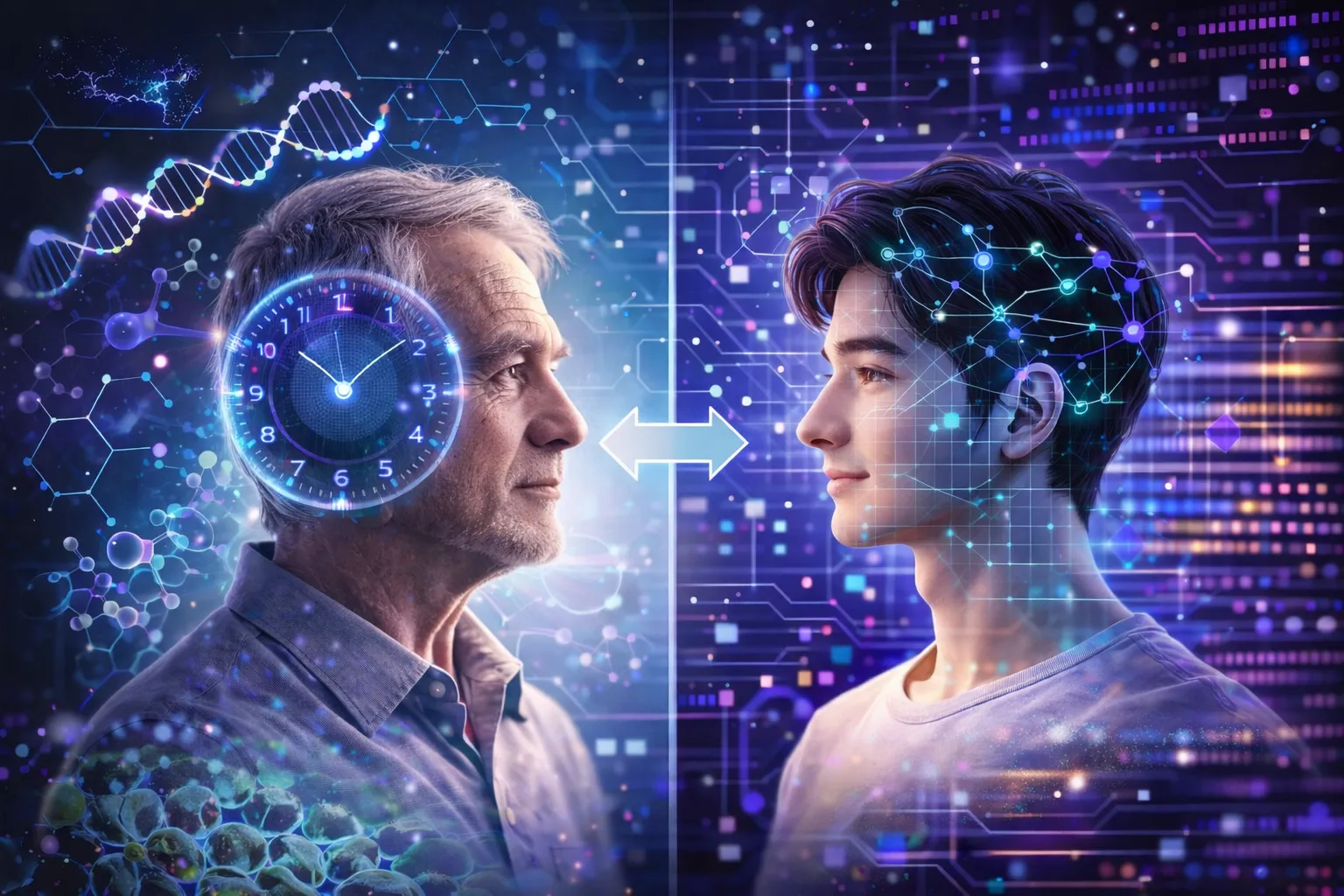
The number on your ID isn't the whole story. Science distinguishes between biological age — how much your cells and organs have actually aged — and apparent age — how old you look to others. In the same person, these two numbers can diverge by 5 to 15 years or more.
What Determines How Old You Look?
Why does one 45-year-old look like they're in their thirties while another looks older than their years? Researchers have spent decades studying this question, and several key factors emerge.
1. Genetics: Your Built-In Aging Clock
Around 40–60% of visible aging is genetically influenced. Key genetic factors include:
- Collagen production genes: Determine baseline skin elasticity
- Telomere length: Controls how many times cells can divide; shorter telomeres = faster aging
- Melanin levels: More pigment means better natural UV protection, slowing visible aging
If your parents and grandparents look young for their age, you've likely inherited a favorable hand.
2. UV Exposure: The Biggest Accelerant
Dermatologists universally identify UV radiation as the leading external cause of skin aging. Some studies attribute up to 80% of visible facial aging to cumulative sun exposure.
UV damage includes:
- DNA strand breaks → accelerated cellular aging
- Collagen and elastin degradation → wrinkles and sagging
- Pigmentation changes → age spots, uneven tone
- Microvascular damage → redness, broken capillaries
3. Lifestyle: Daily Choices That Accumulate
| Habit | Effect on Apparent Age |
|---|---|
| Smoking | Reduces oxygen delivery to skin; smokers appear 2–5 years older on average |
| Alcohol | Dehydration and vascular dilation cause lasting skin damage |
| Sleep | Collagen synthesis peaks during sleep; chronic shortage = dull skin and dark circles |
| Exercise | Improves circulation, lowers stress hormones; regular exercisers can appear up to 10 years younger |
| Diet | Antioxidant-rich foods protect cells; excess sugar accelerates collagen breakdown |
4. Stress: The Visible Toll
Chronic stress continuously releases cortisol, which breaks down collagen and impairs cellular regeneration. Stress also degrades sleep quality and drives unhealthy behaviors — a compounding cycle.
Research has shown that after major stressful life events, apparent age can accelerate by 2–3 years on average.
What AI Age Detection Actually Measures
AI tools measure apparent age — how old a face looks in a photograph — not biological age. If your result comes back younger than your real age, it reflects good skin care, lifestyle habits, or genetic luck. If it reads older, don't despair: lighting, fatigue, and photo conditions all affect the number.
Most Effective Steps to Protect Your Apparent Age
- Daily SPF 30+ sunscreen — the single highest-return skin investment
- 7–8 hours of quality sleep — when skin actually regenerates
- Quit or reduce smoking — visible improvement begins almost immediately
- Stay well hydrated — directly affects skin elasticity
- Eat antioxidant-rich foods — berries, green tea, nuts
The number matters less than how energized and healthy you feel. An AI age test is a fun mirror — use it as a starting point for taking care of yourself.