Your Mood Changes the World You See: The Science of Emotion, Perception, and Choice
Feeling blue isn't just a metaphor. Learn how your emotional state physically alters color perception, music preference, and the choices you make all day — and how to use that knowledge.

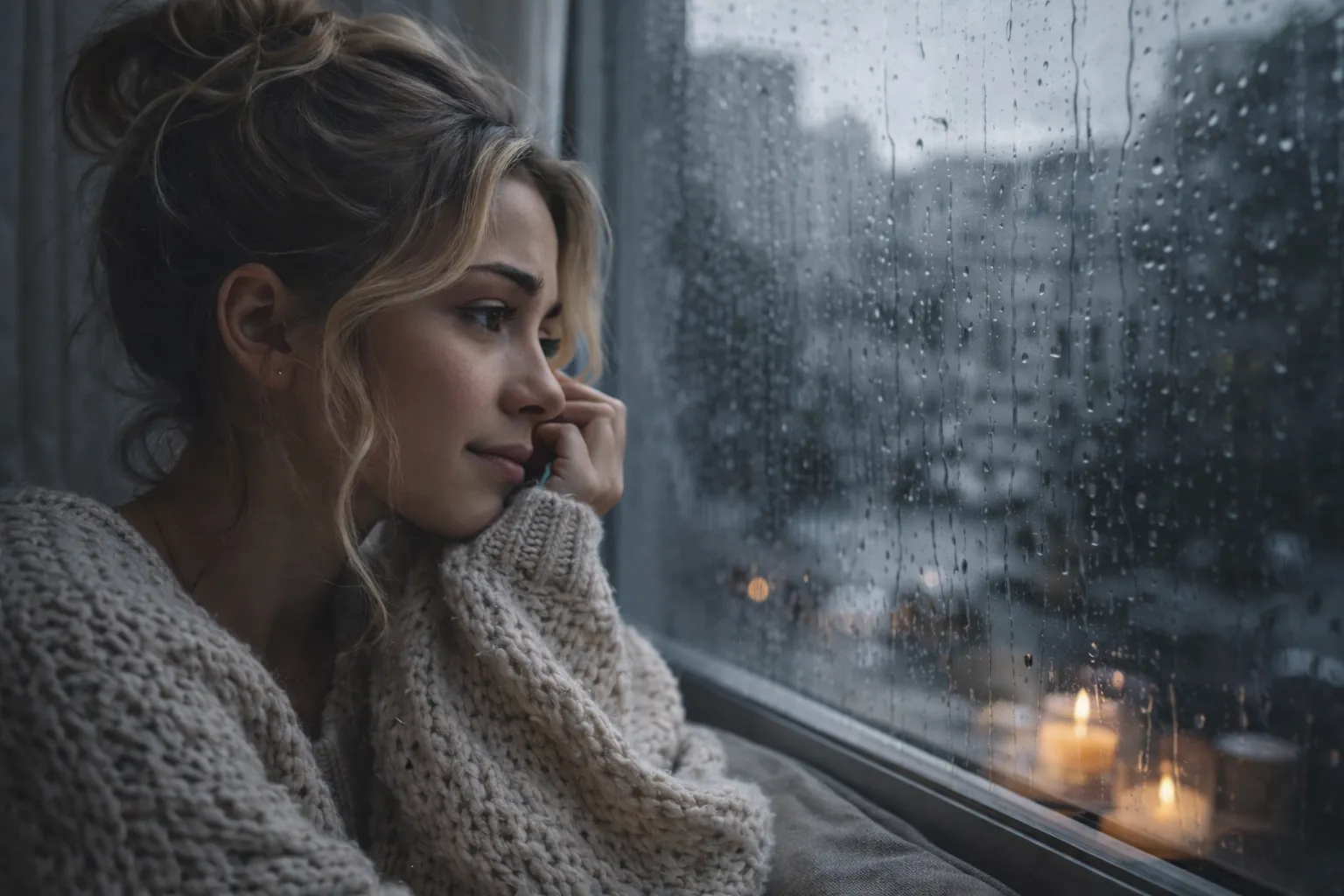
Does the World Really Look Greyer When You're Sad?
"Why does everything look so dull today?" — if that thought has crossed your mind, you weren't imagining things. Your emotional state doesn't just color your thoughts; it literally alters how you perceive the physical world around you.
Neuroscience and psychology research confirm this. Emotions directly affect color perception, auditory processing, and the moment-to-moment choices we make about what we seek out. Here's what the science says.
How Emotions Alter Color Perception
A landmark 2015 study from Northwestern University found that participants induced into sad or depressed emotional states showed a measurable reduction in their ability to distinguish blue-yellow color gradients. The mechanism involves dopamine — a neurotransmitter that plays a role in retinal color signal processing. Emotional state affects dopamine levels, which in turn shifts how accurately we perceive certain color spectrums.
This is why "feeling blue" is more than metaphor. The brain's emotional systems and perceptual systems are deeply intertwined.
Warm vs. Cool Colors: Why Mood Drives Attraction
When we're in a particular emotional state, we're pulled toward color families that match our internal arousal level.
| Emotional State | Preferred Color Range | Why |
|---|---|---|
| High energy / excitement | Reds, oranges, yellows | Arousal levels match the stimulating quality of warm hues |
| Calm / meditative | Blues, greens, purples | Soothing effect resonates with low-arousal state |
| Sadness / low mood | Desaturated, dark tones | Reflects diminished internal energy |
| Anxiety / tension | High-contrast, intense colors | Mirrors hyper-aroused state |
| Joy / happiness | Bright, highly saturated colors | Aligns with activated positive affect |
Importantly, this relationship runs both ways. Mood shapes color preference — but deliberately exposing yourself to certain colors can also nudge your mood in return.
Music and Emotion: The Science of BPM, Key, and Timbre
Everyone knows music affects mood. But understanding exactly which elements do what gives you a powerful toolkit for emotional self-regulation.
Tempo: Entraining with Your Heartbeat
The resting human heart beats at roughly 60–80 BPM. Music tempo interacts with this biological baseline in measurable ways.
- Below 60 BPM: Slows perceived heart rate, induces relaxation and meditative states
- 60–120 BPM: Stable, comfortable emotional territory — good for focus and flow
- 120–160 BPM: Increases energy and excitement, ideal for physical activity
- 160+ BPM: Intense arousal, urgency, or cathartic release
Key: The Emotional Grammar of Major and Minor
The association between major keys and brightness, and minor keys and melancholy, is not purely cultural conditioning. Studies with isolated populations with minimal music exposure found similar emotional responses to major and minor tonalities, suggesting there may be a more universal perceptual basis for this association.
Timbre: The Emotional Texture of Instruments
The same melody played on different instruments creates entirely different emotional experiences:
- Acoustic guitar: Intimacy, warmth, organic naturalness
- Strings (violin, cello): Deep pathos, longing, grandeur
- Piano: Precision, emotional clarity, introspection
- Electronic synthesizers: Futurism, dreaminess, or urban coolness
- Percussion-forward: Primal energy, physical drive
The Feedback Loop: Mood → Sensory Preference → Mood Reinforcement
Here's the key insight that ties everything together: emotions don't just create preferences. The sensory inputs you choose (music, color, environment) feed back to reinforce — or intensify — the original emotion. This creates a loop.
When you're feeling sad, you're drawn toward sad music. That music deepens the sadness, which pulls you toward darker visual environments, which reinforce the emotional state further. Psychologists call this an emotional spiral — and it can run in both directions.
Breaking or Redirecting the Loop
Once you understand the loop, you have a tool. If you want to shift your emotional state, you can intervene consciously: choose music whose BPM, key, and timbre point toward where you want to go, rather than where you currently are. The change won't be instant, but the loop will begin to redirect.
Color Psychology Research: Emotions and Colors
Decades of color psychology research have produced consistent patterns:
| Color | Emotional Effects | Physiological Response | Practical Use |
|---|---|---|---|
| Red | Passion, urgency, energy | Slight heart rate increase | Motivation, urgency |
| Orange | Joy, warmth, sociability | Appetite stimulation, openness | Creative work, socializing |
| Yellow | Optimism, alertness | Cortical activation | Idea generation, brightening mood |
| Green | Stability, recovery, balance | Cortisol reduction | Stress relief, restoration |
| Blue | Calm, trust, focus | Heart rate stabilization | Concentration, winding down |
| Purple | Mystery, sensitivity, creativity | Meditative state induction | Inspiration, introspection |
Practical: Using Mood Awareness to Improve Your Day
Morning Color Check-In
When you wake up, notice which colors you're instinctively drawn to. That pull reflects your current emotional state. Simply naming it — "I'm drawn to grey-blue tones this morning" — activates the reflective awareness that gives you more agency over the day ahead.
Intentional Music Selection
Choose music to match your current state when you want to sit with a feeling, or choose music that points toward your desired state when you want to shift. Use BPM as your primary lever: it's the most physiologically direct connection between music and emotion.
Environmental Color Design
The colors around you — workspace, clothing, app themes — exert a subtle but continuous influence on emotional tone. Lean into this. Blues and greens for focus and calm; warm yellows and oranges for creative, social energy.
Track the Pattern
Keep a simple log: each day, note the color you're drawn to and the music mood you want. After a month, you'll have a remarkably accurate map of your emotional rhythms — and you'll start to notice patterns you'd never seen before.
Emotion Awareness Is a Skill
Emotions are not things that happen to you beyond your control. Understanding how they shape perception and preference — and learning to work with the feedback loop consciously — is the essence of psychological flexibility.
Mood Vibe is built on exactly this principle. The color you're drawn to right now, the music you want to hear — these are not random. They're signals. Learning to read them is learning to understand yourself.