Building the Perfect Playlist for Your Current Mood: A Complete Curation Guide
Don't shuffle randomly. Learn to identify your emotional state, match music to your mood archetype, and use the 'mood sandwich' technique to intentionally shift how you feel.

Why Playlist Curation Matters for Mental State
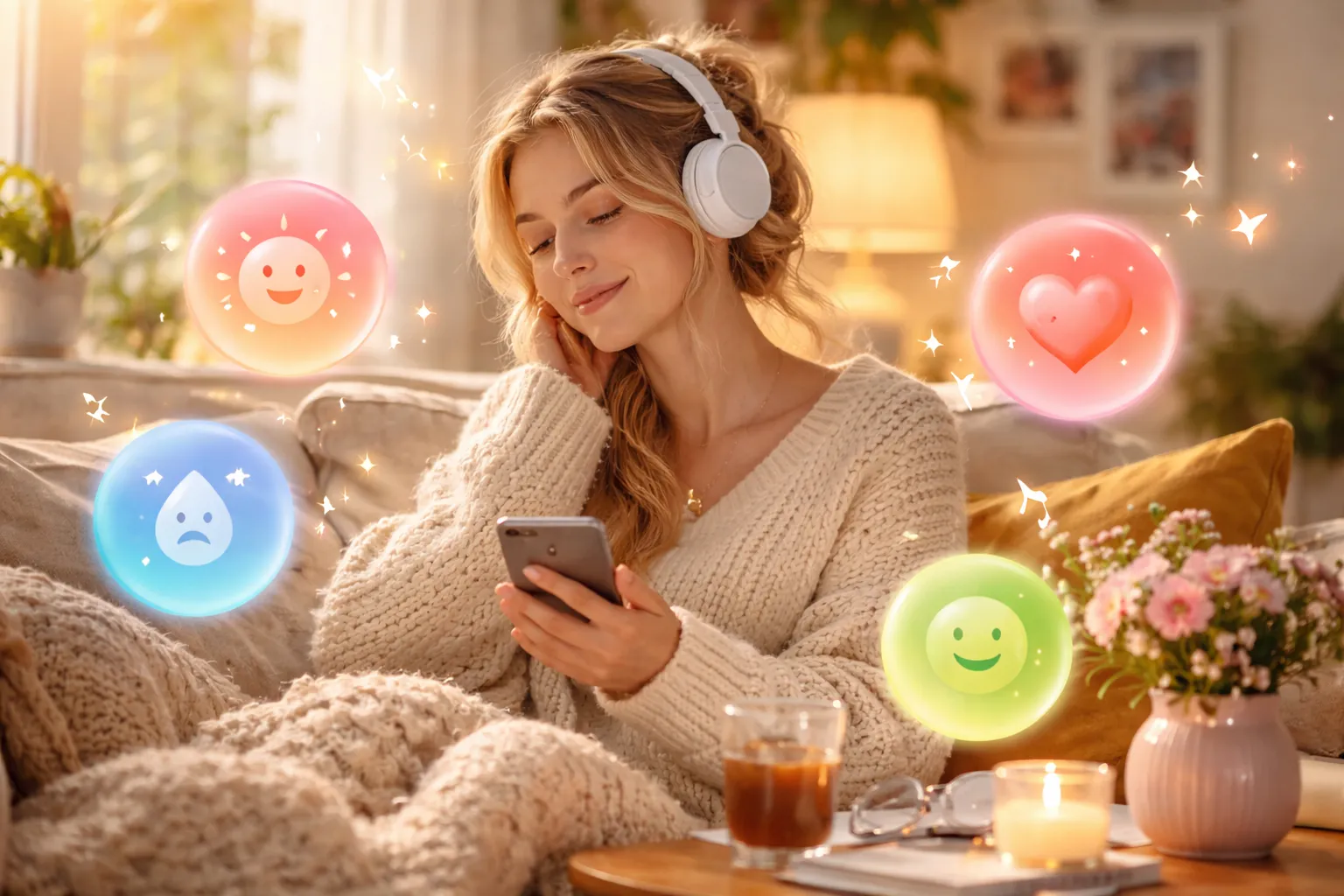
There's a real difference between having music on in the background and choosing music with intention for your current emotional state. Research consistently shows that music matched to your mood can improve emotional regulation by 15–20% more effectively than randomly selected music. Mismatched music, on the other hand, can introduce friction — subtle irritation, difficulty concentrating, or a sense of emotional dissonance you can't quite name.
Playlist curation is emotional self-care in a very practical form. When you can accurately read your current mood and prescribe the right music for it, you gain genuine agency over the emotional texture of your day.
The 5 Mood Archetypes and Their Ideal Music Characteristics
While human emotional experience is infinitely varied, psychology identifies five recurring mood archetypes that show up across cultures and contexts. Here's what each one needs musically:
| Mood Archetype | BPM Range | Key | Genre Examples | Sound Character |
|---|---|---|---|---|
| Energized | 130–170 | Major | Pop, Dance, EDM, Rock | Driving drums, bright riffs |
| Focused | 70–110 | Major / Neutral | Lo-fi hip hop, Ambient, Neoclassical | Repetitive patterns, no lyrics |
| Emotional | 50–80 | Minor | Ballad, Indie folk, Classical | Strings, resonant vocals |
| Calm | 55–80 | Major / Neutral | Acoustic, Jazz, Ambient | Soft textures, open space |
| Low / Depleted | 40–65 | Minor | Slow jazz, Drone ambient, Minimal | Slow development, muted tones |
Deep Dive: What Each Archetype Needs
Energized states benefit from high BPM and clear major tonality. If you want to sustain the energy, stay above 130 BPM. If you need to channel it productively rather than just burn it off, pull back toward 120 BPM and introduce more structured rhythm.
Focused states are notoriously disrupted by lyrics — especially in your primary language, which activates the brain's language processing regions and competes for cognitive resources. Lo-fi hip hop's characteristic repetitive, slightly textured quality creates a consistent sonic environment that many people find acts as productive "acoustic scaffolding."
Emotional states are where most people make the classic mistake: reaching for upbeat music to "fix" how they feel. Research in music therapy suggests it's often more effective to let music match and resonate with your current emotion first, allowing you to process it fully, before transitioning. Suppressed emotional processing tends to resurface.
Calm states can be deepened or used as a launchpad. To deepen: acoustic jazz, nature-layered ambient. To transition to activity: gradually shift BPM upward from 80 toward 100, introducing more rhythmic definition.
Low / Depleted states require the most care. Forcing high-energy music when you're truly depleted can feel jarring and alienating. The goal is gentle uplift, not a shock to the system.
How to Transition Your Mood Through Music
Using music intentionally means designing a pathway from where you are to where you want to be — not just pressing play on something that sounds good.
The Three Principles of Emotional Transition
1. Locate yourself accurately. Map your current state on two axes: energy level (high/medium/low) and emotional valence (positive/neutral/negative). This gives you a coordinate, not just a vague feeling.
2. Set a destination. Where do you want to be? More focused, more energized, more at peace, or do you need to fully inhabit a feeling before moving on? Clarity about the goal is what separates intentional music use from passive listening.
3. Design the path. Don't try to jump from one extreme to the other in a single song. Move BPM in 10–15 unit increments. Let your nervous system follow rather than drag it along.
Tips for Building Your Mood-Based Playlist Library
When you find music that works for a specific emotional state, file it — don't just listen and forget. A well-organized mood-based library becomes a personal emotional toolkit that's immediately ready when you need it.
Building strategy:
- Create five core folders mapped to the mood archetypes (Energized, Focused, Emotional, Calm, Low)
- Aim for at least 20 tracks per folder to avoid repetition fatigue
- Build transition playlists specifically for moving between adjacent states
- When you discover new music, immediately tag which mood state it fits
- Review seasonally — the same track can function differently in January than in July
The "Mood Sandwich" Technique
This is one of the most effective techniques from music therapy practice, and it's elegantly simple.
The Structure
First slice (where you are): Begin with music that closely matches your current emotional state. The goal here is to meet yourself where you are without resistance. This isn't giving up on change — it's building the bridge from a solid foundation.
The filling (the bridge): Music that sits between your current state and your desired state in terms of BPM, energy, and emotional tone. This is where the gradual shift happens — emotions begin to move.
Second slice (where you want to be): Music that represents your target emotional state. Because the previous two layers have done the work, you arrive here naturally rather than jarringly.
Real Example: Low / Depleted → Focused
- Layer 1: Slow lo-fi hip hop, 55–65 BPM, minor key — resonates with the depleted state, no resistance
- Layer 2: Medium-tempo lo-fi jazz, 75–85 BPM, neutral key — energy begins to lift
- Layer 3: Instrumental ambient or neoclassical, 90–100 BPM — natural arrival at focus-ready state
Four to six songs per layer makes this a 20–30 minute emotional journey that actually works.
Start Simple
You don't need to overengineer this. Start with the five archetype folders and assign your ten most-played songs to them. Notice which ones consistently work for which states. Use Mood Vibe to identify your current emotional coordinate and get a starting recommendation. From there, trust your instincts — you already know more about your own emotional soundtrack than you realize.